MCP Gateway / Using the MCP SDK
Using the MCP SDK
Learn how to use the MCP SDK wrapper for advanced tool development and MCP protocol features.
Overview
Section titled “Overview”The MCP SDK wrapper provides low-level access to MCP features. It allows an MCP server built using the official MCP TypeScript SDK to be deployed as a Function.

Basic usage
Section titled “Basic usage”To deploy an existing MCP server or a new MCP server as a Function using the MCP TypeScript SDK, start with a file that exports an instance of McpServer.
import { McpServer } from "@modelcontextprotocol/sdk/server/mcp.js";import { z } from "zod";
export const server = new McpServer({  name: "demo-server",  version: "1.0.0",});
server.registerTool(  "add",  {    title: "Addition Tool",    description: "Add two numbers",    inputSchema: { a: z.number(), b: z.number() },  },  async ({ a, b }) => {    const output = { result: a + b };    return {      content: [{ type: "text", text: JSON.stringify(output) }],    };  },);
A simple gram.ts file then wraps that server so it can be deployed as a Function.
import { withGram } from "@gram-ai/functions/mcp";import { server } from "./mcp.ts";
export default withGram(server);
Resources
Section titled “Resources”MCP resources can also be deployed via Functions when using the MCP SDK wrapper.
import { McpServer } from "@modelcontextprotocol/sdk/server/mcp.js";import { z } from "zod";
export const server = new McpServer({  name: "demo-server",  version: "1.0.0",});
server.registerResource(  "a-cool-photo",  "resources://a-cool-photo",  {    mimeType: "image/jpg",    description: "This photo is really something",    title: "A Cool Photo",  },  async (uri) => {    let res = await fetch("https://picsum.photos/200/300.jpg");    return {      contents: [        {          uri: uri.href,          blob: Buffer.from(await res.arrayBuffer()).toString("base64"),        },      ],    };  },);
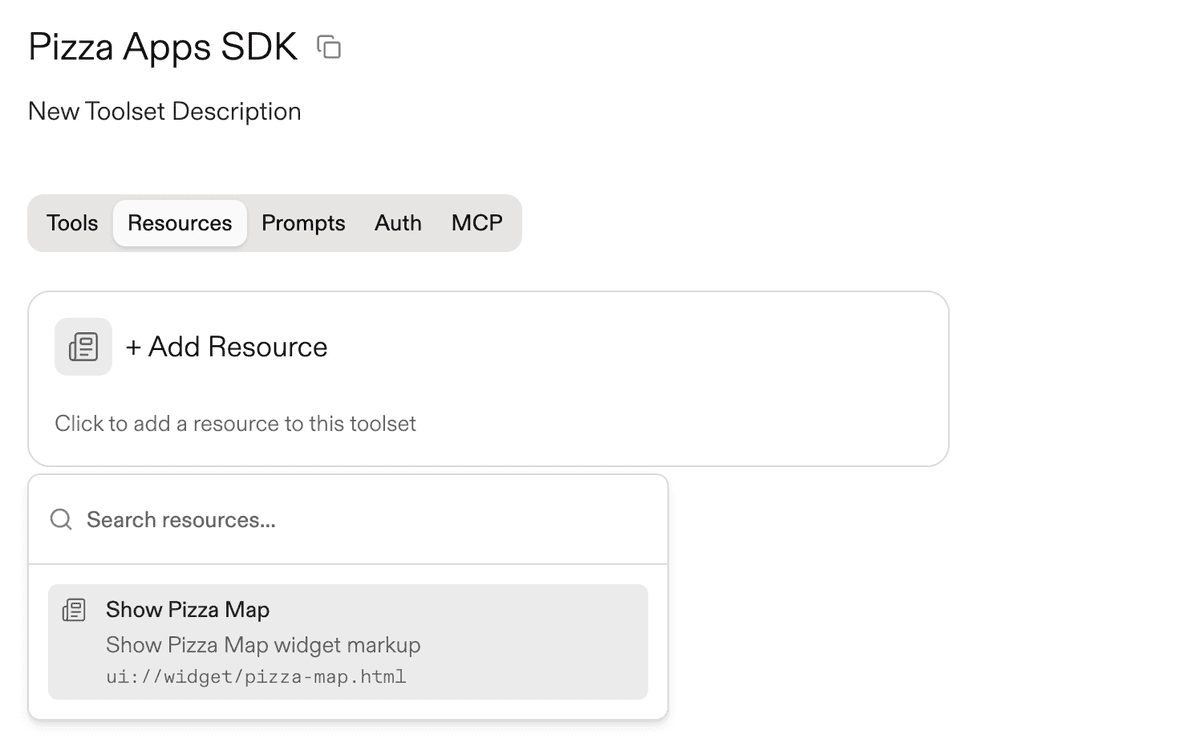
After running push, open the MCP server from MCP Gateway > MCP and select the pushed resource on the server’s Resources tab to add it to the server.
Environment variables
Section titled “Environment variables”Specify credentials or environment variable values that need to be available in the tool runner environment. These can be provided either via stored environments or via MCP headers set by the end user.
import { withGram } from "@gram-ai/functions/mcp";import { server } from "./mcp.ts";
export default withGram(server, {  variables: {    API_KEY: { description: "API key for authentication" },  },});
Next steps
Section titled “Next steps”- Build and deploy Functions.